
In Washington D.C., Governor Newsom takes urgent call for LA wildfire recovery aid directly to Congress
In meetings with congressional leaders from both sides of the aisle, Governor renews call for long-awaited recovery funding to help survivors return home and rebuild
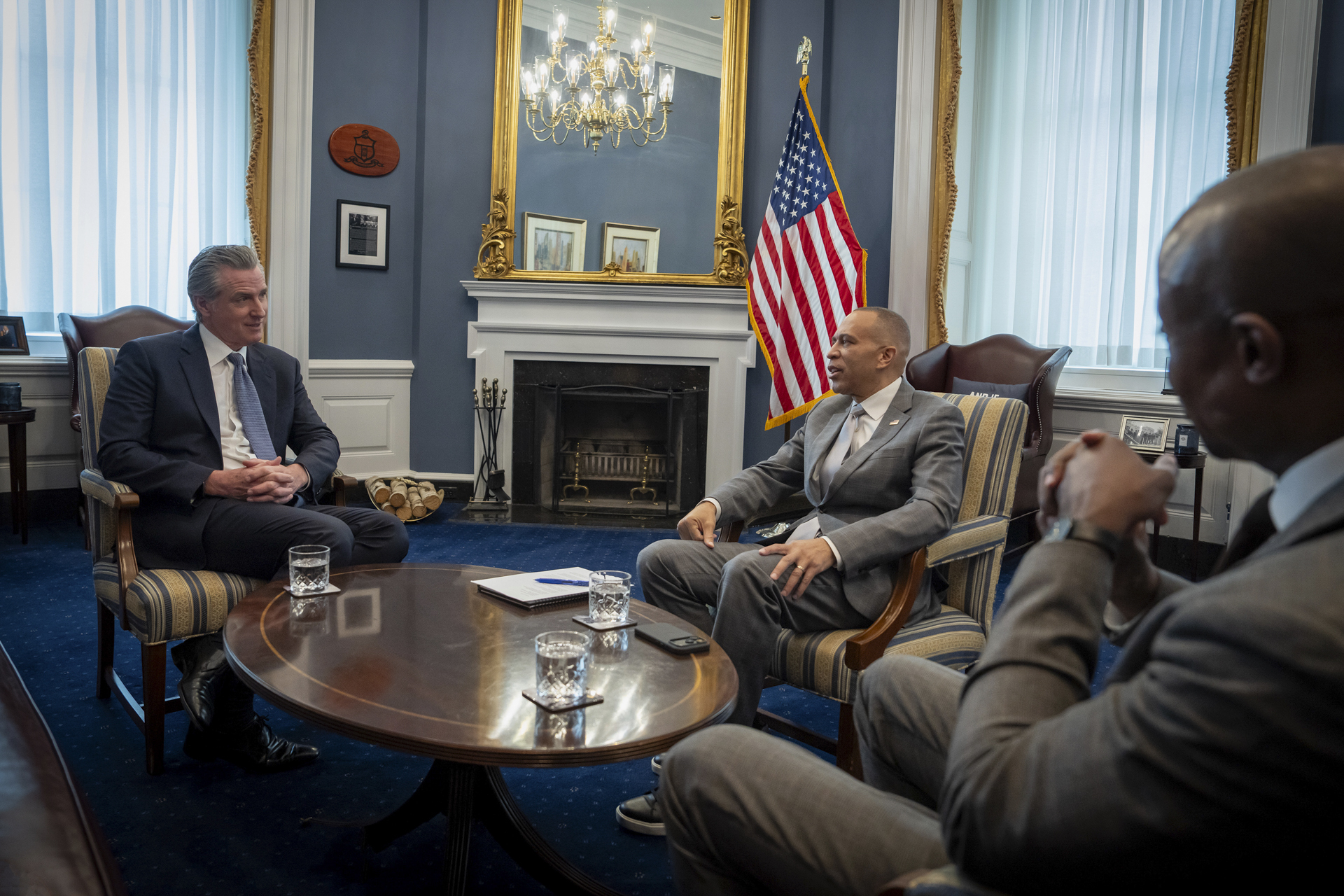
Governor Newsom meets with soon-to-be House Speaker Hakeem Jeffries in Washington, D.C., to discuss Los Angeles wildfire recovery funding and shared priorities for the next Congress
What you need to know:Governor Newsom is meeting with congressional leaders from both sides of the aisle to renew his request for disaster recovery funding that Congress has not yet approved. An updated $12.98 billion request prioritizes the most urgent unmet needs of Los Angeles wildfire survivors. The Governor is urging the 119th Congress to act before it adjourns in December.
WASHINGTON, D.C. – Governor Gavin Newsom met with Republican and Democratic congressional leaders today to renew his call for federal disaster recovery funding to help Los Angeles wildfire survivors return home and rebuild their communities.
The Governor met with House Minority Leader Hakeem Jeffries; House Appropriations Committee Chairman Tom Cole, Ranking Member Rosa Delauro, and Rep. Ken Calvert (CA-41); and California’s U.S. Senators Alex Padilla and Adam Schiff. He also met with members of the Congressional Asian Pacific American Caucus.
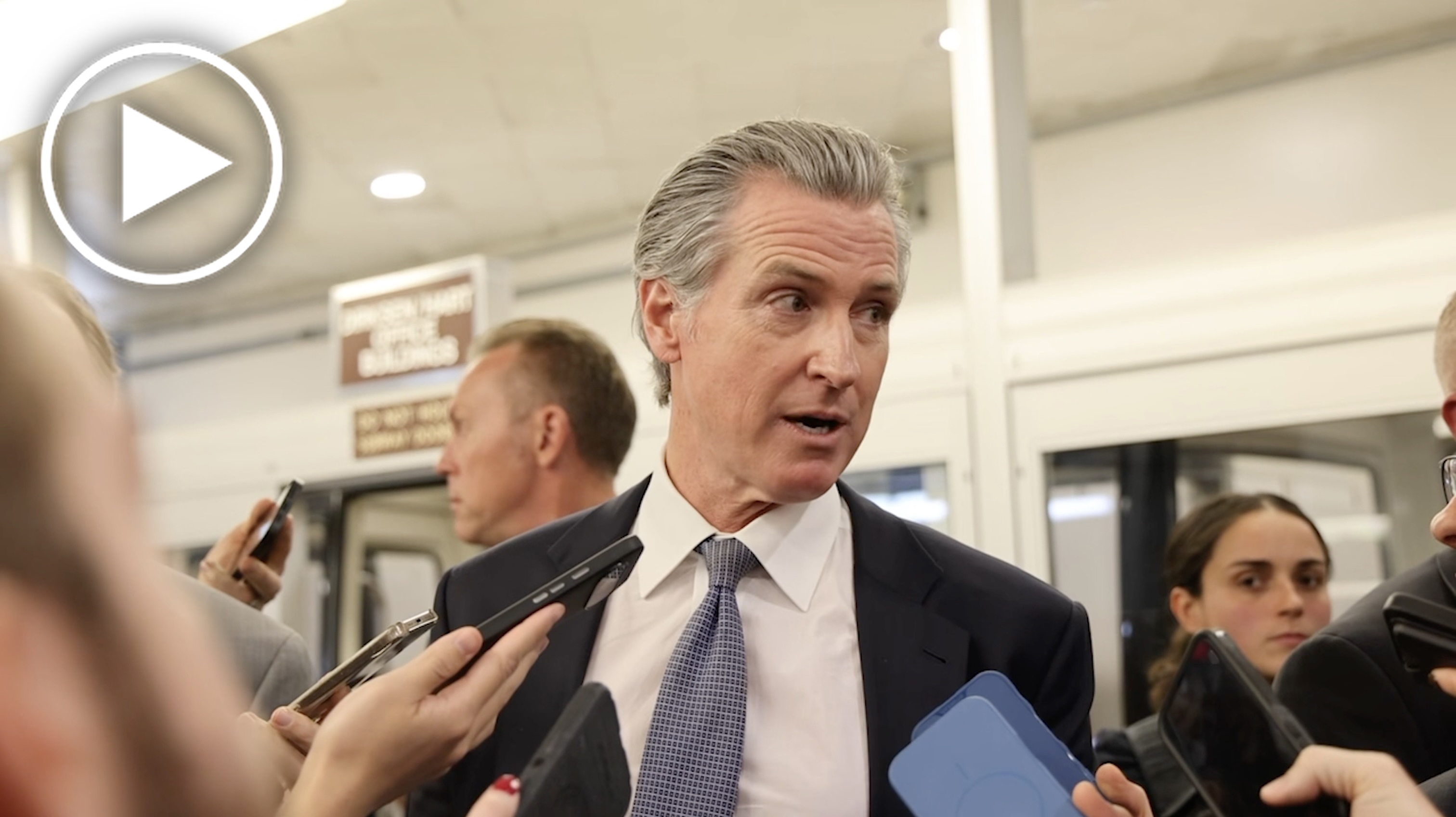
California first requested supplemental recovery funding following the January 2025 firestorms. With that funding still awaiting congressional approval, the Governor is delivering an updated $12.98 billion request focused on the most urgent unmet needs identified in close coordination with local governments and residents.
Behind every request for recovery funding is a family working to return home, a small business trying to reopen, or a neighborhood determined to rebuild. These survivors have met extraordinary loss with extraordinary courage.
Whatever our political differences, we share a responsibility to help Americans whose lives have been upended by disaster. Congress must act before the year ends. These families have waited nearly two years. They should not have to wait for another Congress to help them return home.
Governor Newsom meets with Rep. Ken Calvert (CA-41) and House Appropriations Committee Chairman Tom Cole (OK-04) as part of ongoing discussions to secure federal wildfire recovery funding for Los Angeles
Today’s meeting with appropriators builds on the work that Governor Newsom began in February 2025, when Chairman Cole and Rep. Calvert pledged to work with the Governor to advance recovery funding for Los Angeles.
In a letter addressed to House Speaker Mike Johnson, House Minority Leader Hakeem Jeffries, House Appropriations Committee Chairman Tom Cole, and Ranking Member Rosa DeLauro, the Governor urged Congress to include the LA Fire recovery assistance in the final appropriations bill it acts on this December.
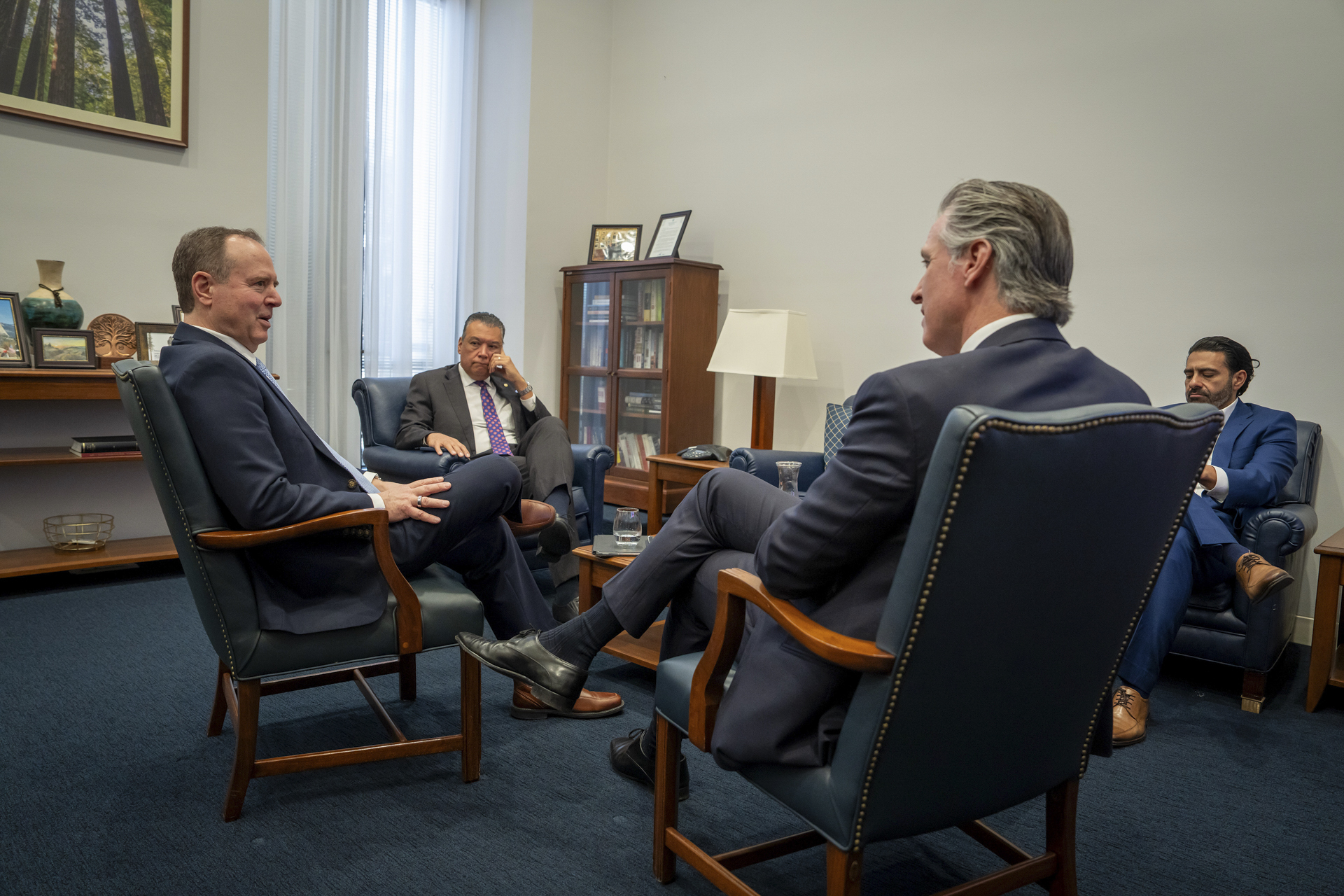
Governor Newsom meets with California U.S. Senators Adam Schiff and Alex Padilla in Washington, D.C., as they continue to push Congress to approve federal wildfire recovery funding for Los Angeles
The Governor’s letter also urges Congress to address Los Angeles’ recovery needs alongside those of other disaster-affected communities, including in North Carolina, West Virginia, and Hawaii.
Read the Governor’s letter to House leaders.
Read the Governor’s letter to Senate leaders.
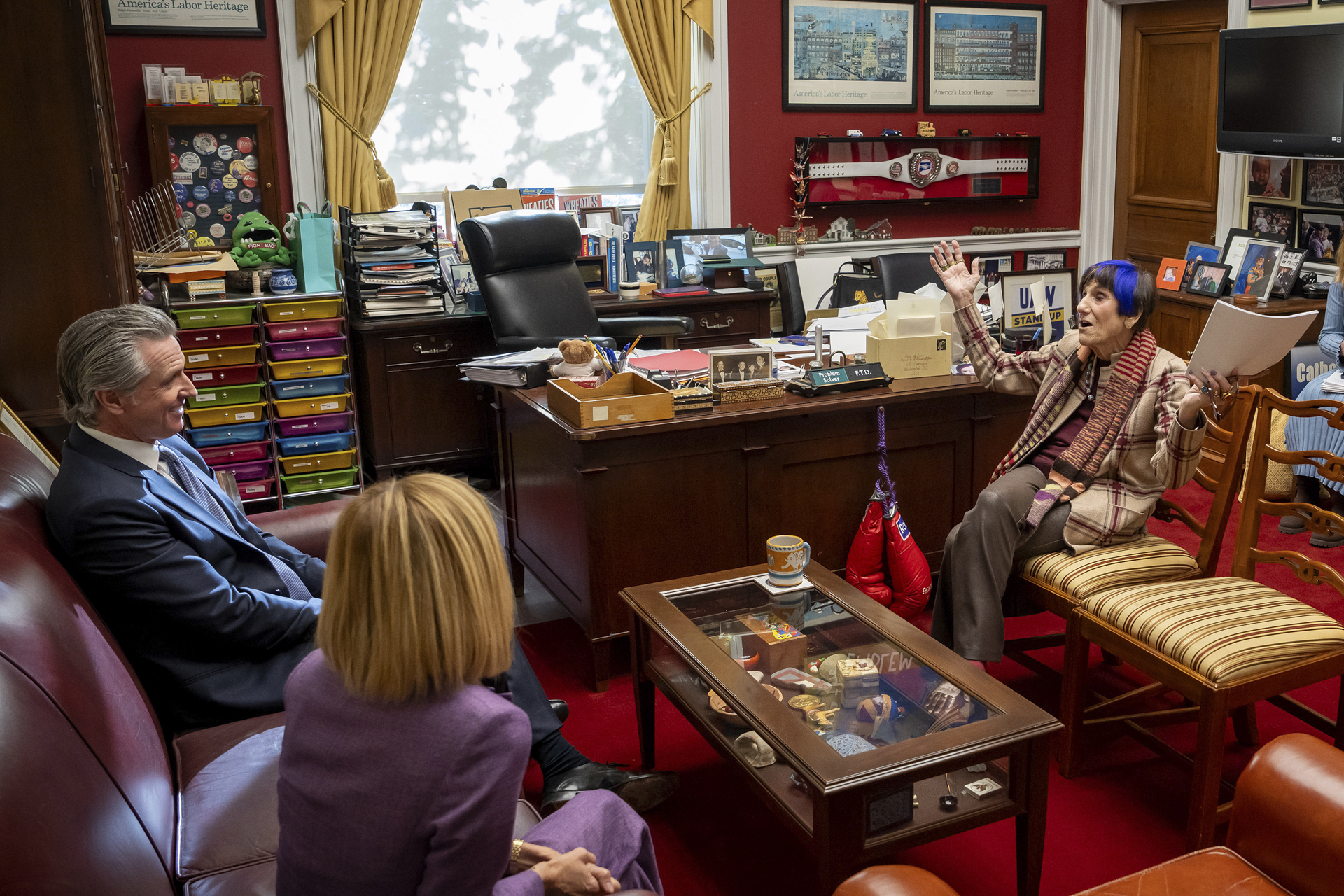
Governor Newsom meets with House Appropriations Committee Ranking Member Rosa DeLauro (CT-03) in her Washington, D.C. office on Los Angeles wildfire recovery funding
Nearly two years after the fires, many LA Fire survivors remain displaced and face mounting costs as they navigate insurance claims, secure temporary housing, and determine how to afford rebuilding. The updated request reflects where communities stand in their recovery today and prioritizes assistance that cannot wait.
Addressing the most urgent recovery needs
The request seeks funding to help close gaps left by insurance and other assistance, restore essential services, and support the businesses and jobs communities depend on. Priorities include:
-
Housing and community infrastructure:$8.4 billion in Community Development Block Grant Disaster Recovery funding to help close gaps in home construction and rehabilitation, repair essential infrastructure, and protect communities against future disasters.
-
Public facilities and disaster resilience:$2.5 billion for eligible FEMA Public Assistance projects, plus more than $750 million for hazard mitigation. Projects include replacing destroyed schools, repairing fire hydrants, and restoring libraries, community centers, and parks.
-
Drinking water and wastewater systems:$759 million to repair damaged drinking water systems, restore stormwater infrastructure, and improve wastewater resilience.
-
Child care: $240 million to rebuild and repair child care facilities, helping families return to work and communities recover.
-
Local businesses and jobs: $179 million in Economic Development Administration grants to support economic recovery, small businesses, workforce training, and commercial corridors.
-
Transportation: Approximately $161 million to repair roads and other transportation infrastructure and support safe evacuation and return.
The Governor is also seeking changes to Small Business Administration disaster loans, including higher loan limits and more flexible disbursement and repayment rules to support survivors throughout reconstruction.
California continues to stand alongside survivors
California’s recovery efforts include financial assistance for homeowners, faster permitting, and protections against exploitation:
-
Crushing red tape with unprecedented action:Since the 2025 Los Angeles fires, California has worked to cut red tape, speed rebuilding, and support survivors through every stage of recovery. The Governor has issued 28 executive orders to expedite recovery, including streamlining or suspending barriers under the California Environmental Quality Act and the Coastal Act, accelerating debris removal and rebuilding, expanding temporary housing options, extending regulatory relief, protecting tenants, and strengthening safeguards against price gouging and predatory real estate speculation. While the state does not issue local building permits, the Governor’s actions are directly enabling historic local results, including 9,376 permits issued by local building departments as of this week.
-
Investing directly in faster permitting: The state has moved aggressively to empower local governments by providing millions of dollars in direct grants to expand permitting staffing, modernize systems, and accelerate plan review and permitting. The state helped deploy Archistar, a cutting-edge AI-driven plan-check tool that allows homeowners to identify design and code issues before submitting applications — reducing costs, eliminating weeks or months of back-and-forth, and dramatically speeding approvals.
-
Relief for homeowners:Last year, Governor Newsom signed AB 238 to provide eligible homeowners with up to one year of mortgage forbearance, launched a state mortgage relief fund covering up to $100,000 per homeowner, announced $15 million to administer the CARE Fund, and worked directly with lenders to extend forbearance windows. The state also funded pre-approved, low-cost home designs tailored to the architectural character of affected communities — allowing permits to be issued in a fraction of the time.
As of July 2026, nearly 42,000 insurance claims have been filed, with more than 40,000 at least partially paid, totaling $25.2 billion, according to the California Department of Insurance. -
Protecting communities from exploitation:Governor Newsom has enforced and strengthened price-gouging protections, cracked down on illegal and predatory land speculation, and expanded consumer protections to prevent families from being exploited.
-
Debris removal and community recovery: In partnership with the federal government, California helped deliver the fastest debris removal in state history, clearing the way for rebuilding at record speed. This work began under the Biden Administration. The state has provided assistance to , childcare providers, small businesses, and workers impacted by the fires.
-
Closing the rebuilding funding gap: In September, Governor Newsom launched a $100 million Disaster Rebuilding Assistance Program to help survivors bridge the gap between insurance payouts and the cost of rebuilding. Developed in response to feedback from Eaton and Palisades fire survivors, the program helps lower borrowing costs and expand access to construction loans through interest rate assistance and loan guarantees. The state budget also provides $15 million to the California Community Foundation to administer the CARE Fund and creates a dedicated Disaster Recovery and Anti-Displacement Implementation Fund. That fund supports gap financing for homeowners who are rebuilding, community land banking and acquisitions, partnerships with nonprofits, and community land trusts, and coordination of survivor oversight.
