

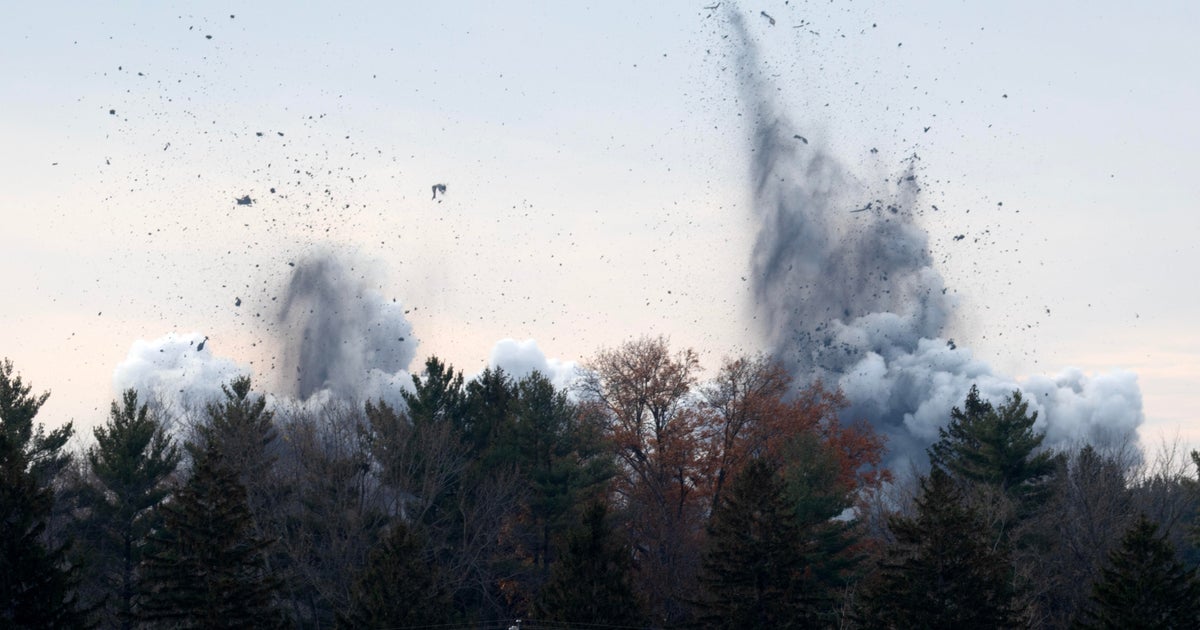
The U.S. Army detonated a stockpile of degrading explosives at a munitions plant in Iowa on Wednesday morning, following community outcry and a legal fight over concerns of a possible dust plume containing toxic lead particles spreading after the blast.
Five tons of unstable explosive material, containing the highly sensitive compound lead azide, were blown up in a controlled detonation at the Iowa Army Ammunition Plant in Middletown, which is a small community of about 350 people, located four hours west of Chicago by car.
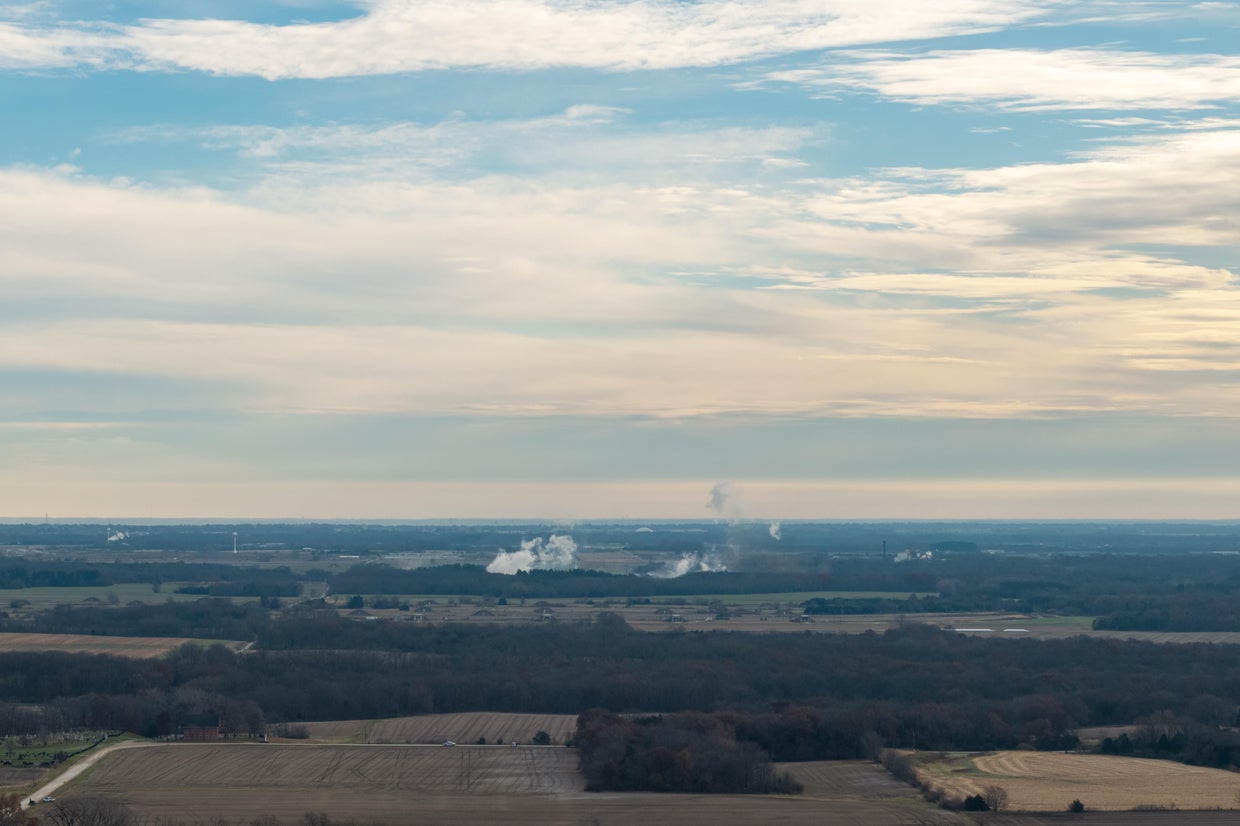
As scheduled, the detonation took place at 9 a.m. local time. A few loud pops rang out in livestream footage of the explosion followed by a faint smoke cloud that rose up above the rooftop of the Armed Forces Reserve Center building that separated its cameras from the detonation site
Fifteen minutes after it happened, the Environmental Protection
Fifteen minutes after it happened, the Environmental Protection Agency reported that zero lead was detected in the air by four monitors stations in the area. Those sensors continued to show the same readings two hours later, according to the EPA.
Army Maj. Gen. Eric P. Shirley, the commander of the operation, described the detonation as “tremendously successful” at a news conference Wednesday.
“I believe absolutely that we reduced, as close to zero as is absolutely humanly possible, the risk to the health and the safety of the people of Middletown and the extended communities throughout Iowa,” he said.
Rob Cekada, the director of the Bureau
Rob Cekada, the director of the Bureau of Alcohol, Tobacco, Firearms and Explosives, added that the operation went “100% as planned,” with the blast driving the explosion into the ground and minimizing the the amount of lead dispersed into the atmosphere, as designed.
Earlier, local officials told CBS News minutes after the explosion that the smoke plume was visible in Iowa. But the Pentagon said it received an early report from an explosive ordnance disposal specialist on the ground, which appeared to show a positive outcome.
“The explosion exceeded all expectations,” a senior administration official told CBS News. “Maximum mitigation efforts achieved.”
President Trump echoed that assessment in a social
President Trump echoed that assessment in a social media post after the detonation, writing that “early reports from Iowa are that the Army’s mitigation efforts have far exceeded expectations.” An Army official told CBS News the detonation went “much better than projected,” while current Iowa Gov. Kim Reynolds called it “successful.” She said in a statement that the Army planned to share more information at a news conference set for noon ET.
“We remain in close contact with authorities on the ground, while state agencies continue to monitor incoming data from the State Emergency Operations Center,” Reynolds said. “We will keep Iowans informed as details become available.”
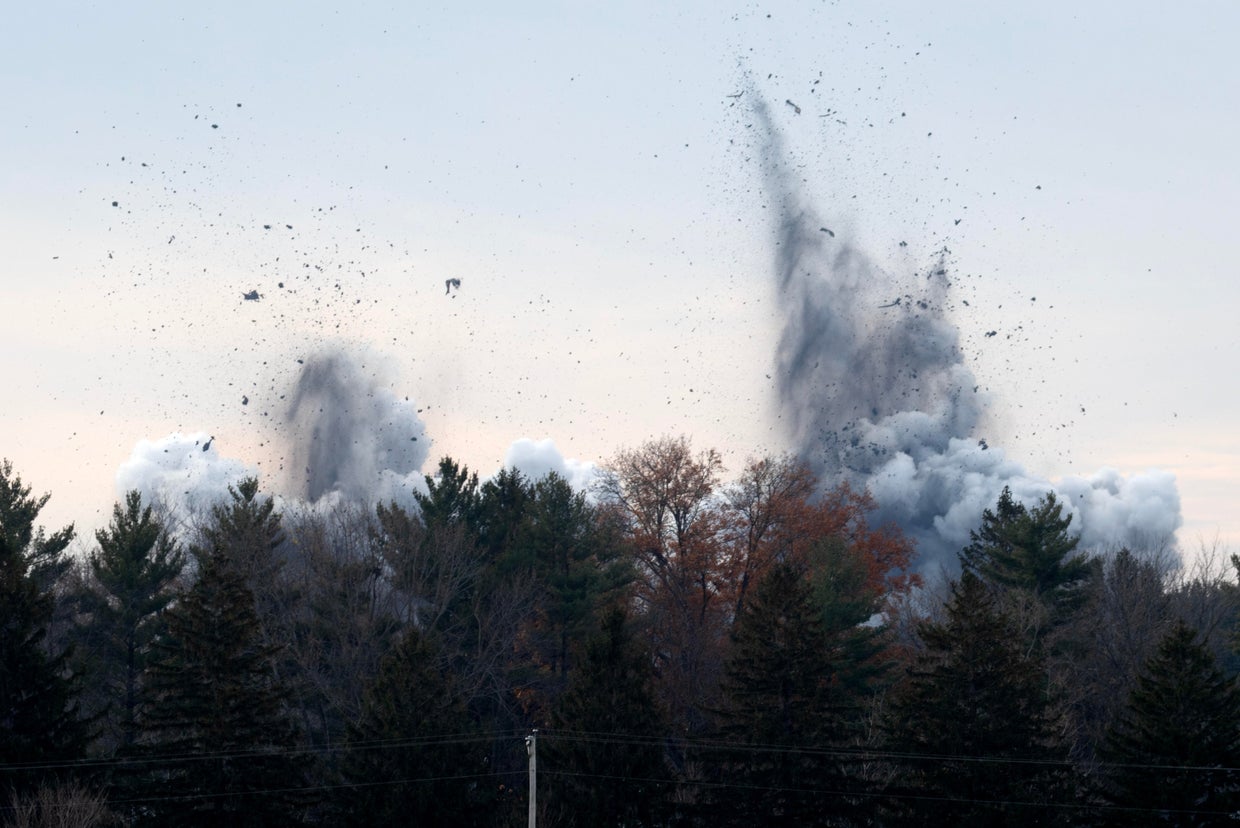
The Middletown plant housed about 68 barrels or roughly 10,000 pounds of lead azide, which has been used in ammunition since World War I. According to the Environmental Protection Agency, the explosives degraded over about 20 years in storage, giving way to a process called recrystallization that made the material more susceptible to accidental detonation from friction or other movement.
The Army had pushed to carry out
The Army had pushed to carry out the controlled detonation because of the public safety risks associated with the cache possibly blowing up on its own. But environmental groups and local residents attempted to block its plans, fearing the health and agricultural consequences of a toxic plume of lead dust that could disperse across the region after the blast.
The Army said it had taken steps to barricade the concrete bunkers holding the munitions and absorb the toxic dust, including with aqueous foam, which is used to extinguish fuel fires, environmental officials have said.
“Precise deployment of aqueous foam blocks, two walls of four 16,000-gallon water tanks, and gel blocks adjacent to the bunkers will absorb thermal energy and reduce airborne particulate emissions directly at the blast
Officials had warned that a plume could spread
Officials had warned that a plume could spread over parts of southeastern Iowa and northeastern Missouri, potentially threatening homes, playgrounds, farmlands and other spaces. Maps released Tuesday by the Army noted that the dust cloud may travel as far as 100 miles, but the most potent effects would likely be felt within 30 square miles of the munitions plant.
Missouri Gov. Mike Kehoe said after the explosion that reports from federal and state officials in Iowa indicated it was “well-contained.”
“Initial analysis shared with us by federal partners and Iowa Homeland Security and Emergency Management indicates that the mitigation measures appear to have been successful and the explosion was well-contained,” Kehoe said on social media.
Legal challenge questioned detonation
The detonation was postponed last week after environmental groups
The detonation was postponed last week after environmental groups filed a lawsuit challenging the emergency permit the EPA had granted the Army to authorize it. The groups argued the agency had not provided residents of the area with adequate notice of its plans or evidence showing the detonation was the best course of action from a health and safety perspective.
But the 8th Circuit Court of Appeals’ initial ruling blocking the detonation was lifted Monday. The court acknowledged “the very real risks presented by the Army’s planned detonation,” but ultimately found the risk of an uncontrolled explosion more harmful.
Acting Secretary of the Army Adam Telle said at a Tuesday news conference that plans would move forward as falling temperatures caused the explosives to become more and more volatile, increasing the chances of a spontaneous explosion. Telle said the weather forecast Wednesday is “ideal to protect public health and safety across the region.”
Inaction is no longer an option, Army Maj
“Inaction is no longer an option,” Army Maj. Gen. Eric Shirley, the commander of the operation, said Tuesday. “It would be irresponsible for us to not take the determined, consensus-based course of action moving forward.”
Mr. Trump had said earlier this week that the Army would not move ahead with the detonation without the court’s affirmative ruling and the approval of Iowa Gov.-elect Rob Sand. However, Sand was not required to weigh in and hasn’t officially taken office.
