

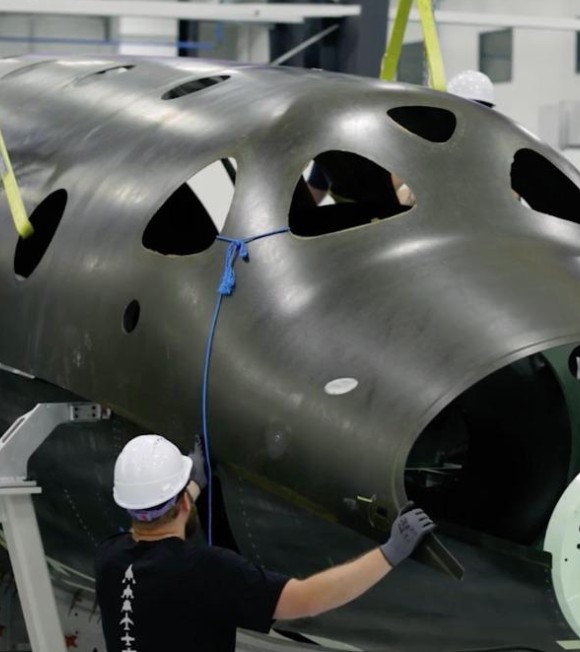
Virgin Galactic’s would-be space tourists will have to wait a bit longer and probably pay more before they take off into the wild blue yonder.
The company said Aug. 12 that it is delaying the start of commercial service for its new Delta spaceship from the fourth quarter of this year to February 2027.
Virgin Galactic CEO Michael Colglazier said that space flights at $750,000 were sold out and that there will be “higher price points” when ticket sales reopen in the fall.
The company says right now that the flights
The company says right now that the flights are “currently fully booked,” meaning some space riders may end up waiting several years before they go aloft.
It’s the latest twist in the space aspirations of Tustin-based Virgin Galactic, which was founded by flamboyant U.K. entrepreneur Richard Branson in 2004.
Quarterly Loss Narrows to $56M
The Tustin-based company reported $100,000 in revenue for the second quarter while the cash position “remains strong” at $286 million. The net loss narrowed to $56 million from $67 million in the second quarter of 2025 (NYSE: SPCE).
The strain is shown in the company’s stock
The strain is shown in the company’s stock price. Shares were trading for $3.08 each as of Aug. 21 for a market cap of $467 million, far below the 52-week high of $8.90 set on June 1.
Colglazier blamed the delay on the extra time needed to “complete avionics and systems installations.”
The schedule slip sent shares in the company tumbling by 12% in after-hours trading.
With a second Delta spaceship scheduled to enter service, Virgin Galactic plans to ramp up to 10 or more spaceflights per month by June 30, Chief Financial Officer Doug Ahrens told stock analysts in a conference call.
The forerunner ship, Unity, made the company’s last revenue-earning spaceflight in June 2024.
Carried Aloft By Airplane ‘Eve’
The spaceships are launched from their specially constructed carrier airplane called Eve.
The flights are sub-orbital, meaning their space voyage
The flights are sub-orbital, meaning their space voyage doesn’t take them around the Earth, in fact far from it.
Previous trips on the earlier model Unity spaceship included several minutes of weightlessness at the edge of space, reaching an altitude of about 50 miles above Earth.
Space tourism briefly had two competing suborbital operators under development, Virgin Galactic and Jeff Bezos’s Blue Origin.
As of this year, neither is flying.
“The suborbital market now has demand without supply,” industry website SpaceDaily said.
