

US National Archives receives more than 120 WWII POW testimonies
UA.NEWS22
September
2026
14:43
In the United States, the National Archives and Records Administration (NARA) has recovered about 300 pages of previously unknown documents from the Second World War. They are mainly handwritten first-person testimonies from more than 120 American prisoners of war held by the Germans, the Jerusalem Post reports.
The documents, stored in a cardboard box, were found by Jason Hurdle, a resident of Waterloo, New York, in a previously unknown concealed utility space in his garage. He then contacted a local museum, where he was advised to get in touch with NARA. In January, two agency representatives came to Hurdle’s home, and in July NARA said that its Archival Recovery Team had safely recovered the documents.
Testimonies about captivity
The first page of the files bears the marking “SECRET.” The documents were likely part of a broader US initiative aimed at determining whether Germany had complied with the international treaty on the proper treatment of prisoners of war, signed in Geneva in 1929.
More current news is available on the UA.News Telegram channel Telegram.
In their testimonies, US servicemen described the conditions of their detention after being captured during the Battle of the Bulge. One prisoner reported that an American was wounded by a German noncommissioned officer during an air raid. Another wrote that prisoners were sometimes marched for days without food or water and transported in rail cars that could hold up to 80 people. Another serviceman said he had witnessed a prisoner die of malnutrition in Nuremberg. More than 23,000 American servicemen were taken prisoner during the Battle of the Bulge.
Preserving the documents
According to The Washington Post, these files were not listed among missing federal documents. How they ended up in Hurdle’s garage has not yet been established. He suggested that the box may have belonged to a former neighbor.
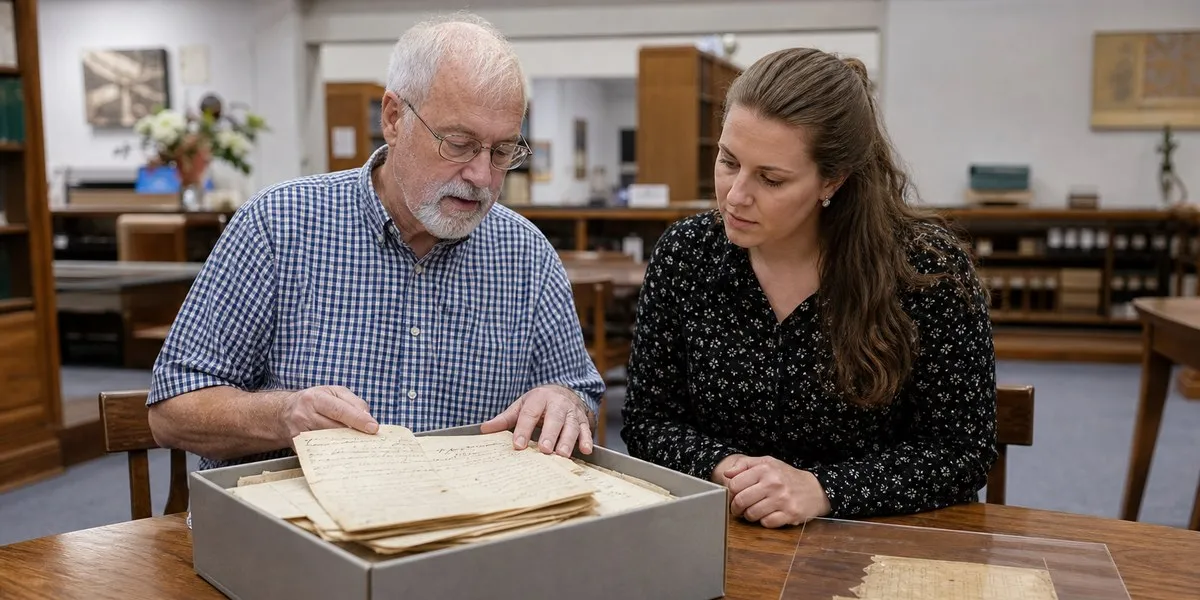
The documents have now been placed in a gray box with a printed declassification label and preserved in the same order in which they were found. A partially damaged page was placed in a transparent protective sleeve, and only NARA archivists may work with the fragile materials. Agency representative Grace McCaffrey said the archive plans to digitize the records and make them available to the public.
