
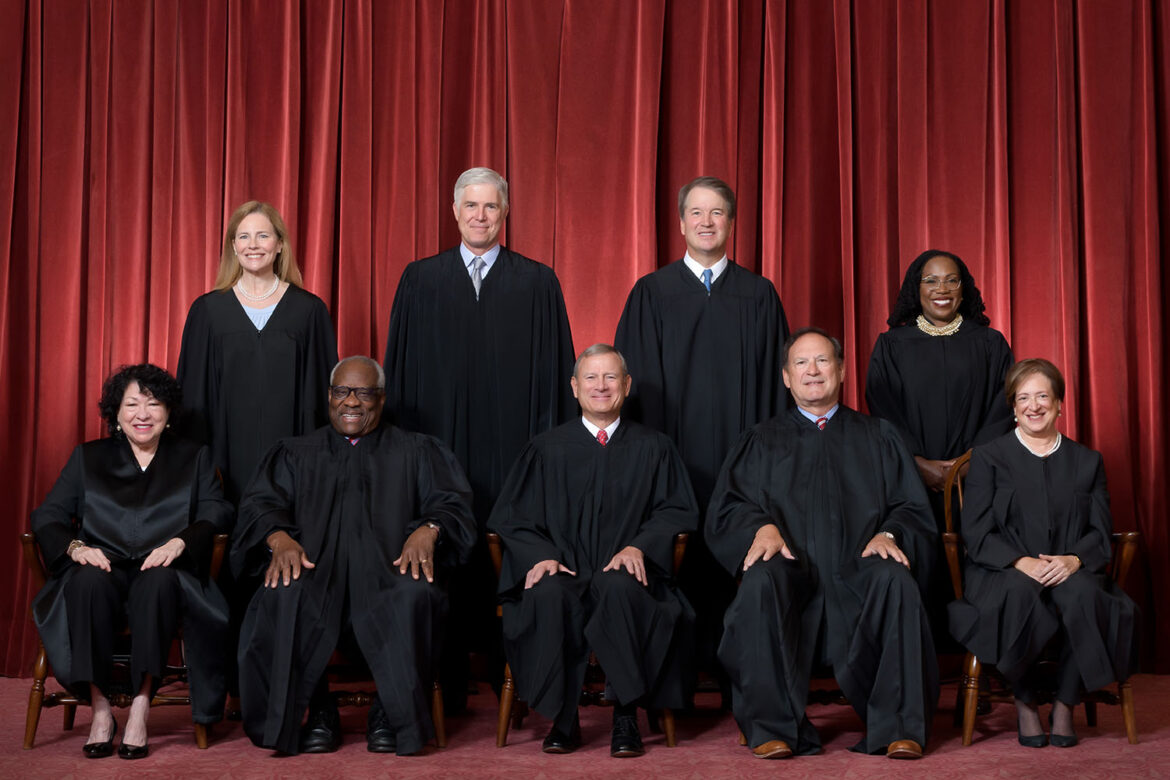
The U.S. Supreme Court opened its new term Monday with several cases that could have consequences for minority faith communities and Earth-centered spiritualities, touching on climate change, religious land use, public funding, and the boundaries of religious freedom
The Court began its 2026–27 term on October 5 with oral arguments in a case that could determine the future of dozens of lawsuits seeking to hold fossil-fuel companies financially responsible for local costs associated with climate change. Meanwhile, the justices have agreed to hear a religious-land-use dispute from Kentucky that could clarify federal protections for religious organizations confronting zoning restrictions. And in November, the Court will hear a Colorado case testing the relationship between religious freedom, public funding, and anti-discrimination protections.
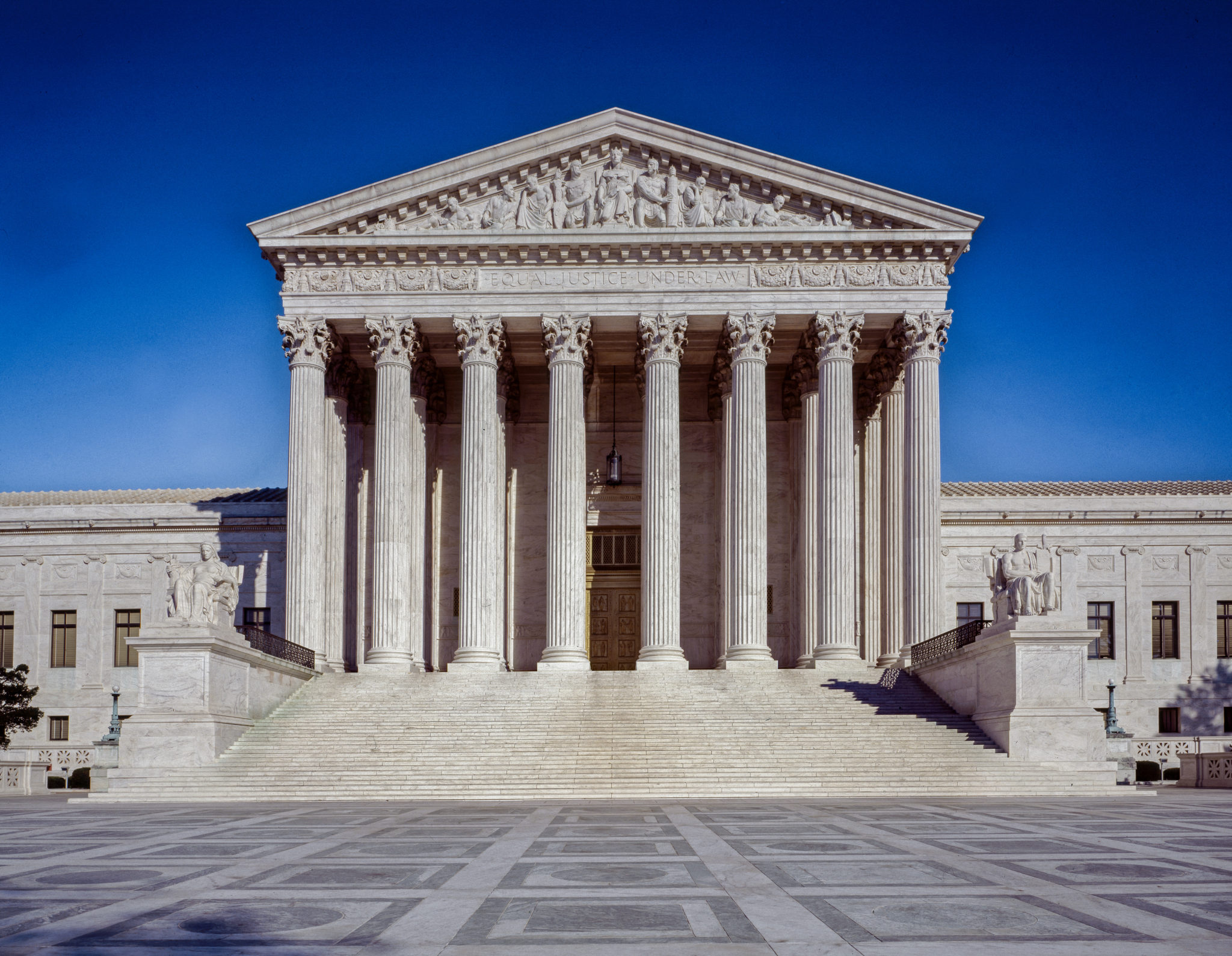
United States Supreme Court Building By Carol M. Highsmith – Library of CongressCatalog: http://lccn.loc.gov/2011631106Image download: https://cdn.loc.gov/master/pnp/highsm/12900/12912a.tifOriginal url: http://hdl.loc.gov/loc.pnp/highsm.12912, Public Domain, https://commons.wikimedia.org/w/index.php?curid=91285025
Climate change and corporate liability
In Suncor Energy v. Board of County Commissioners
In Suncor Energy v. Board of County Commissioners of Boulder County, Boulder County, San Miguel County, and the City of Boulder, Colorado, sued Suncor Energy and ExxonMobil under state law. The governments allege that the companies promoted and sold fossil fuels while misleading the public about their contribution to climate change, despite knowing about the potential consequences. The lawsuit seeks compensation for local costs associated with climate-related harms, including wildfires, flooding, drought, and extreme weather.
The companies deny wrongdoing and argue that Colorado cannot use state tort law to impose liability for harms resulting from global greenhouse-gas emissions. Questions involving interstate and international emissions, they contend, are governed by federal law, including the Clean Air Act, rather than the laws of individual states.
The Colorado Supreme Court allowed the lawsuit to proceed. The U.S. Supreme Court agreed in February to review that decision and also directed the parties to address whether the justices have jurisdiction to decide the case at this stage.
The stakes extend well beyond Colorado
The stakes extend well beyond Colorado. Nearly 60 similar climate-related lawsuits have been filed around the country many alleging that fossil-fuel companies misled consumers and governments about climate risks. A broad ruling could determine whether many of those cases can proceed under state law
Justice Samuel Alito has recused himself from the case, leaving eight justices participating.
For Pagan and other Earth-centered religious communities, the case does not concern religious freedom directly. Its significance instead lies in environmental responsibility and in determining what legal avenues remain available to communities seeking compensation for the local consequences of climate change.
A second case could have more direct implications for Pagan and other minority religious organizations.
Missionaries of Saint John the Baptist v
Missionaries of Saint John the Baptist v. Frederic involves a Catholic nonprofit seeking to construct a shrine to the Virgin Mary next to Our Lady of Lourdes Catholic Church in Park Hills, Kentucky. The proposed development includes a grotto, plaza, walking path, and retaining wall on property located in a residential zone.
The local zoning board initially approved the project. Neighbors Joel and Elizabeth Frederic, who raised concerns including increased traffic, challenged the decision. Kentucky appellate courts ultimately concluded that the zoning board lacked authority to approve the project under existing zoning rules.
At the center of the dispute is the federal Religious Land Use and Institutionalized Persons Act, or RLUIPA. Enacted in 2000, the law prohibits governments from imposing land-use regulations that substantially burden religious exercise unless the government can satisfy strict legal requirements.
The Kentucky Supreme Court concluded that blocking
The Kentucky Supreme Court concluded that blocking the proposed shrine did not constitute a substantial burden. Among other considerations, the court noted that the Missionaries could construct a smaller shrine elsewhere on church property and had acquired the property knowing that zoning restrictions could prevent the project.
The Missionaries argue that the decision reflects disagreement among courts about what qualifies as a “substantial burden” under RLUIPA. The Supreme Court granted review on October 1, limited specifically to that question.
Although the dispute involves a Catholic shrine, the eventual ruling could have consequences for minority religious communities seeking to establish or expand temples, sanctuaries, ritual grounds, retreat centers, and other religious spaces. Pagan organizations confronting zoning restrictions would be protected—or constrained—by the same interpretation of RLUIPA.
Religious freedom, public money, and discrimination
A third case presents a different religious-freedom question:
A third case presents a different religious-freedom question: whether a state offering a generally available public benefit may require religious organizations participating in the program to comply with anti-discrimination rules that conflict with their religious beliefs.
In St. Mary Catholic Parish v. Roy, two Catholic parishes and their preschools challenge conditions attached to Colorado’s Universal Preschool Program, which provides state-funded preschool opportunities through public and private providers.
The Catholic schools contend that their religious beliefs require them to make admissions and other decisions consistent with Catholic teachings regarding sexuality, marriage, and gender. Colorado’s program, however, requires participating providers to comply with nondiscrimination requirements protecting, among others, LGBTQ children and families.
The schools argue that Colorado cannot make generally
The schools argue that Colorado cannot make generally available preschool funding conditional on surrendering their ability to operate according to their religious beliefs. Colorado counters that participating schools are subject to neutral program requirements intended to ensure equal access to a publicly funded educational program.
The case reaches the Supreme Court after a series of decisions expanding constitutional protections for religious institutions participating in public-benefit programs. In Trinity Lutheran Church v. Comer, Espinoza v. Montana Department of Revenue, and Carson v. Makin, the Court held that governments generally cannot exclude otherwise eligible institutions from public benefits simply because they are religious.
But St. Mary presents a related question: What happens when a religious institution is eligible for public funding but objects on religious grounds to conditions attached to receiving that money?
The Court has framed the dispute around two
The Court has framed the dispute around two questions involving when government policies cease to be “generally applicable” under the Free Exercise Clause and whether Carson protects religious institutions only from explicit religious exclusions.
The eventual ruling could reach well beyond Catholic schools, affecting how governments nationwide balance religious-exercise claims against anti-discrimination requirements when religious organizations participate in publicly funded programs.
For minority faiths, the implications could run in more than one direction. Broader protections for religious institutions participating in public programs could strengthen the ability of Pagan and other minority religious organizations to seek government benefits without sacrificing religious practices. At the same time, a broader right to religious exemptions could limit the ability of governments to enforce anti-discrimination protections when taxpayer money is involved.
Taken together, the cases place questions involving
Taken together, the cases place questions involving the environment, religious space, public funding, and the reach of religious liberty before the Court during its new term. Although none involves a Pagan organization directly, the rules the justices establish will not be limited to the religious traditions or parties appearing before them.
The Wild Hunt is not responsible for links to external content.
To join a conversation on this post:
Visit our The Wild Hunt subreddit! Point your favorite browser to https://www.reddit.com/r/The_Wild_Hunt_News/, then click “JOIN”. Make sure to click the bell, too, to be notified of new articles posted to our subreddit.
