

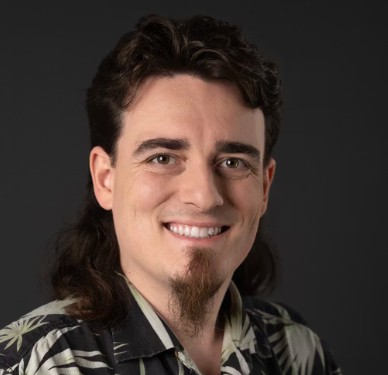
Palmer Luckey has racked up a string of innovations ranging from virtual reality headsets to unmanned fighter jets and robot submarines. He is now branching out into cloning super dogs for the battlefield, backed by a $200 million seed investment round.
The announcement of his new venture, Warhound, comes complete with computer-generated images of dogs wearing goggles and body armor, looking more like video game characters than warriors.
The Anduril co-founder unveiled the company late last month along with fellow backer Ben Lamm, CEO of Colossal Biosciences. Lamm may be best known for trying to use genetic material to bring back the woolly mammoth more than 4,000 years after it vanished from the Earth.
Genetically Engineered for the Battlefield
Industry website Wired said the first pups will
Industry website Wired said the first pups will come off the reproduction line next year. Besides the military, the dogs are intended to serve the police, firefighters and search-and-rescue teams.
The company has collected genetic material from elite service dogs, including the ferocious Belgian Malinois and German shepherds
Scientists plan to clone the cells and genetically modify embryos to produce dogs that are healthier, stronger and better suited to demanding work, Scientific American reported.
Warhound is promising breakthroughs in genetics, cloning, and animal biology “to fundamentally change how America produces, trains, and protects its military working dogs.”
These won’t be just any battlefield dogs like
These won’t be just any battlefield dogs like the German shepherd Rin Tin Tin, who was rescued from the battlefields of World War I and went on to Hollywood stardom.
The company hopes to reduce the risk of health conditions such as hip disease, vision loss and cancer predisposition — and, eventually, to optimize traits desirable in military dogs.
The startup also plans to equip the dogs with technology developed by Costa Mesa-based Anduril Industries, including cybernetic enhancements, battlefield awareness software and its Eagle Eye vision system. Dogs and their handlers would receive protective equipment.
Man’s best friend deserves man’s best tech, Anduril
“Man’s best friend deserves man’s best tech,” Anduril co-founder Palmer Luckey said in introducing the venture Oct. 23.
Few specifics have emerged about the dogs’ precise role on battlefields.
$200M Financing, $1.2B Valuation
Luckey, who co-founded Anduril almost 10 years ago, is a long-time Orange County resident. He has attracted substantial investment during his career and Warhound is no exception. The $200 million seed round features a passel of prominent investors, including Sequoia, 8VC, Franklin Templeton and Breyer Capital as well as In-Q-Tel, a venture capital firm backed by the CIA and other U.S. intelligence services.
Warhound’s initial valuation is an eye-popping $1.2 billion, industry website TechCrunch said.
Luckey says the U.S.-based cloning program will help replace those from a constrained European supply chain, especially the ferocious and highly trainable Belgian Malinois.
The economics of the business, however, remains an open question.
A fully trained Belgian Malinois can reportedly cost
A fully trained Belgian Malinois can reportedly cost upwards of $200,000 and has a life span of 17 years at best.
There is also the question of how many buyers within the military, law enforcement and emergency services have the funds to pay for them.
Ex-Marine Spirk is Warhound CEO
David Spirk has been named CEO of Dallas-based Warhound. He is a veteran of the U.S. Marine Corps and worked as an intelligence specialist with multiple deployments. He ultimately served as deputy associate director of National Intelligence for Afghanistan and Pakistan at the Office of the Director of National Intelligence.
Our long-term goal is simple: healthier dogs, better-prepared
“Our long-term goal is simple: healthier dogs, better-prepared teams, and more service members and first responders coming home safely,” he said.
Warhound said that more than half of military working dogs fail to complete training, adding that reliance on overseas breeders leaves the U.S. in a vulnerable position.
“Warhound was created to improve that system — producing fewer dogs with a greater likelihood of remaining healthy, completing training, and succeeding in their missions,” the Oct. 23 announcement said.
Warhound Draws Animal Welfare Scrutiny
Warhound’s plans to clone and genetically engineer military
Warhound’s plans to clone and genetically engineer military dogs have raised animal-welfare concerns, even as the company brings in the American Humane Society to help safeguard the animals.
American Humane will certify Warhound’s training programs and support efforts to reunite retired military working dogs with former handlers or arrange adoptions.
“We applaud Warhound and Colossal for inviting the country’s first national humane organization, which is grounded in science and ethics, to have a seat at the table,” the organization said in a statement to the Business Journal.
The project has drawn criticism from animal-rights advocates
But the project has drawn criticism from animal-rights advocates and veterinary experts.
Harvard veterinarian and bioethicist Lisa Moses told Scientific American that dog cloning remains inefficient and can require invasive procedures involving numerous animals.
People for the Ethical Treatment of Animals, or PETA, questioned the need for genetically engineered military dogs when robotic alternatives are increasingly available.
“Genetically engineering dogs for dangerous military work is a stunningly old-fashioned idea,” PETA Senior Vice President Colleen O’Brien said in a statement to the Business Journal.
Warhound maintains that its technology will produce healthier
Warhound maintains that its technology will produce healthier dogs, reduce training failures and improve safety for animals and handlers, while increasing their chances of success on missions.
Palmer Luckey’s Other Ventures
Beyond Warhound and Costa Mesa-based defense technology company Anduril Industries, Palmer Luckey has backed ventures in banking, gaming and computers.
Oculus VR: Founded the virtual reality headset company acquired by Facebook in 2014.
Erebor Bank: Co-founded a bank targeting technology companies. It has reportedly attracted more than $7 billion in deposits, according to the Financial Times.
ModRetro: Backer of the retro gaming company behind the Chromatic handheld console, launched in 2024, aims for $1B valuation.
Blue Chip: A venture developing American-made laptop computers with Qualcomm of San Diego.
